Aloe Vera · Acetylated Polymannose · Immune & Wound Support
Acetylated mannan (acemannan): the immunomodulatory polysaccharide of aloe vera
For thousands of years people reached for aloe gel to soothe a burn. Only lately did science isolate the specific acetylated sugar chain that carries much of the story.
A Panacea Bio Chem science review · by Bogdan Dicoias, Scientist & biochemist
· Subject: acetylated mannan / acemannan (aloe polysaccharide) ·
Nothing here is medical advice.
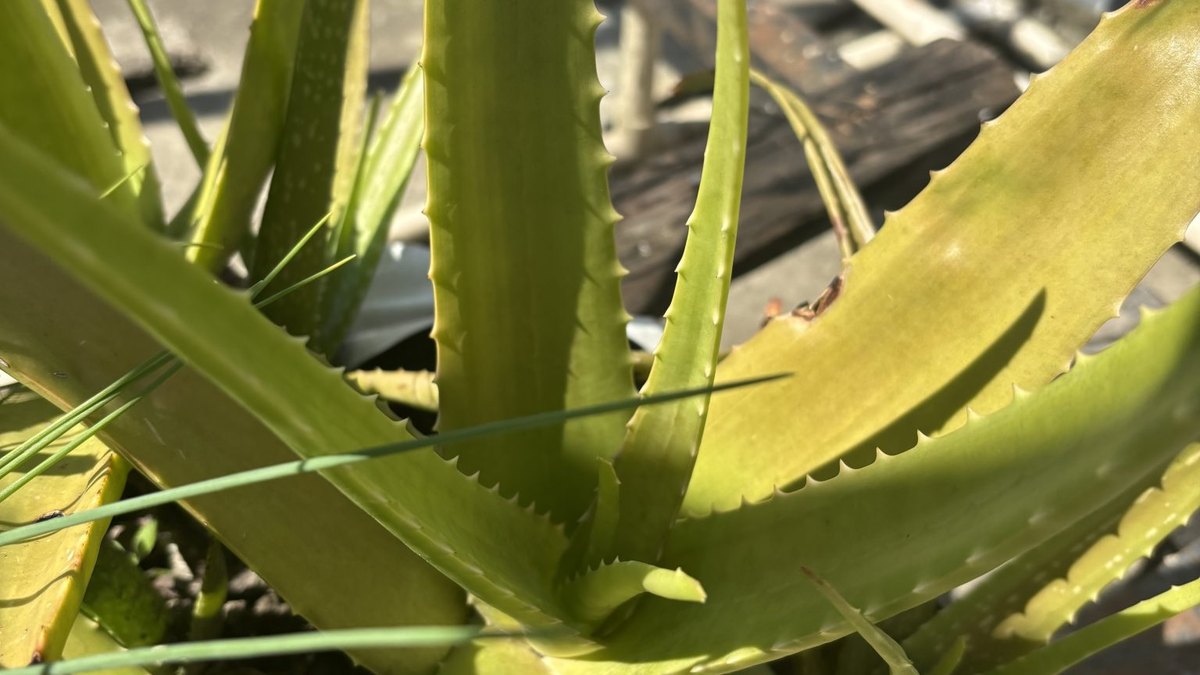
The inner gel of the aloe vera leaf is the natural reservoir of acetylated mannan
(acemannan). This review — and Panacea Bio Chem's polysaccharide research, by Bogdan
Dicoias — begins with the molecule inside the leaf.
Structured abstract
Background. Aloe vera has been a wound and skin remedy across many cultures.
Modern chemistry traced much of its biological interest to a single class of molecule:
acetylated mannan, or acemannan — a long, acetylated chain of mannose sugars in
the inner-leaf gel.
Findings. Acemannan is an immunomodulatory polysaccharide. In laboratory
and animal studies it engages innate-immune cells — chiefly macrophages — and supports
tissue repair, encouraging fibroblasts, collagen and growth-factor signalling. Its acetyl
groups and its chain length are widely regarded as central to these effects.
Interpretation. The most fragile part of acemannan is exactly the part that
matters: acetylation and chain length are readily lost to heat, enzymes and time. Isolating,
drying and storing the molecule gently — so the active features survive — is the real frontier,
and the sphere Panacea Bio Chem researches. Nothing here is medical advice.
Molecule: acetylated mannan (acemannan) |
Source: Aloe vera (Aloe barbadensis Miller) inner-leaf gel |
Class: immunomodulatory / wound-support polysaccharide
1.What acetylated mannan actually is
Peel back the thick rind of an aloe vera leaf and you reach a clear, slippery gel.
That gel is mostly water, but suspended in it is a family of long-chain sugars — and the one that
has drawn the most scientific attention is acemannan. Chemically, acemannan is an
acetylated polymannose: a backbone of mannose units joined mainly by
β-(1→4) bonds, dotted along its length with acetyl groups (small
–OCOCH3 tags) and carrying occasional galactose side branches2.
It is a big molecule — chains running into the hundreds of kilodaltons — and, unlike a neat little
drug, it is a population of chains rather than one fixed structure.
Two features do most of the work. The first is sheer size: long polysaccharide chains are
read by the body very differently from short sugars. The second is the pattern of acetylation.
The degree and position of those acetyl groups is closely linked to how strongly acemannan behaves
in the laboratory, which is why the same plant, processed two different ways, can yield material of
very different character. Acemannan is the reason "aloe" is not one substance but a spectrum — and
why the chemistry of the acetyl group sits at the centre of this whole field.
There is a second ambiguity, in the name itself. Acetylated mannan describes a chemistry; it is not the proper noun of one plant’s molecule. In 2026 a structurally homogeneous acetylated mannan of about 42 kDa was isolated from the pollen of Typha angustifolia, the narrow-leaf cattail — a genuine acetylated mannan, from a plant unrelated to aloe, studied for an entirely different effect on gut bacteria17. This page is about the aloe member of that class.
2.How it supports the immune system
An immunomodulator, not a single-target key
Most drugs are keys cut for one lock. Acemannan is closer to a signal the innate immune
system already knows how to read. Its principal audience is the macrophage4 —
the versatile scavenger cell that patrols tissue, engulfs debris and microbes, and raises the alarm
that coordinates a wider response. In cell and animal studies, acemannan is reported to engage
macrophages and to encourage several of their functions at once:
Activation and phagocytosis. Macrophages become more active and more eager to engulf material, a first-line housekeeping and defence function.
Signalling-molecule release. Reported increases in messengers such as TNF-α, interleukins (IL-1, IL-6, IL-12) and interferon — the chemical vocabulary that recruits and directs other immune cells.
Nitric-oxide production. A short-lived molecule macrophages use as part of their antimicrobial toolkit.
Bridging to adaptive immunity. By stimulating antigen-presenting cells, acemannan is studied for its potential to help the body mount a more coordinated, targeted response — the basis of interest in polysaccharides as vaccine adjuvants.
Because it tunes the body's general defences rather than blocking one specific pathway,
acemannan is described as an immunomodulatory polysaccharide. That places it in the same
broad family of interest as the beta-glucans of yeast and mushrooms — natural long-chain sugars the
innate immune system evolved to notice. The living immune system supplies its own precise messengers
for this work, from host-defence peptides to cytokines like
interleukin-15, a natural immune-cell conductor →;
acemannan is studied as an outside signal that nudges the same machinery.
The acetyl group is not decoration. It appears to be part of the message.
The finding almost nobody quotes
Then there is the finding almost nobody quotes. In 1998 the same laboratory that had reported activation reported that acemannan, in the presence of interferon-γ, drives those same RAW 264.7 macrophages into apoptosis — chromatin condensation, DNA laddering, suppression of bcl-2 — and that nitric oxide was not the mechanism, because blocking nitric-oxide synthase made no difference10.
Is acemannan even the active ingredient? The Aloeride argument
In 2001 a group at the University of Mississippi set out to find what in aloe juice activates immune cells, and reported an answer that has never been comfortably absorbed. They isolated a polysaccharide they named Aloeride — between four and seven million daltons, present at 0.015% of the juice by dry weight — which at 0.5 µg/mL activated NF-κB in human monocytic cells to half the level reached by a maximal dose of bacterial lipopolysaccharide. In the same assay, acemannan at 200 µg/mL produced negligible activation. Their reading was that acemannan preparations look active because they carry traces of Aloeride, and that Aloeride’s potency accounts for the activity of the whole juice11.
Twenty-five years later this sits unresolved. The reviews still describe acemannan as the principal bioactive polysaccharide of aloe12, and nothing found in preparing this page either replicates or refutes the 2001 result for acemannan specifically. It is recorded here because a page that quietly left it out would be easier to write and worth less to read. If Pugh and colleagues are right, a good deal of the immune literature above is a story about a contaminant.
3.How it supports wound healing
The oldest use of aloe is on skin, and here the modern science is at its most concrete. Acemannan
has been examined as a wound- and tissue-support material12. In
laboratory and animal work it is reported to:
encourage fibroblasts — the cells that rebuild the connective-tissue scaffold of a healing wound — to multiply;
promote collagen deposition and organisation, the structural protein of new tissue;
raise the expression of repair-linked growth factors such as VEGF (blood-vessel growth) and keratinocyte growth factor;
support the moist, protected micro-environment a wound bed heals best in.
This has made acemannan a recurring subject in oral and dental research — studied in tooth
socket healing after extraction, in pulp capping, and in soft-tissue repair — and it is a familiar
ingredient in veterinary wound gels used on animals. The through-line is the same as the
immune story: a long, intact, acetylated chain does something a degraded one does not. A wound is,
in a sense, a controlled immune-and-repair event, and acemannan appears to speak to both halves of it.
What the human trials found — the full PubMed record
Here is the whole of it, as far as PubMed records it on 6 September 2026.
Every human controlled trial of acemannan found in PubMed, 6 September 2026 — grouped by how the molecule reached the tissue
Trial
What was done
Participants
Follow-up
Outcome
Placed into the tissue — as a sponge, a particulate or a capping material
An acemannan-containing glyconutrient, 2 or 4 g/day versus placebo, in healthy adults
75 adults
8 weeks
No change in the stimulated cytokine response and no statistically significant change in well-being scores; a fall in monocytes, which the authors read favourably. Well tolerated
Swallowed, the picture is different. The two controlled human trials of oral acemannan found nothing on the markers they set out to move — a 48-week trial in advanced HIV disease at 1600 mg a day, and an eight-week trial of an acemannan glyconutrient in healthy adults. Both found it well tolerated. Neither found it did what the label says.
This is where the subject is usually mishandled, in both directions at once. The best sceptical writing on acemannan — and the 2026 Genetic Literacy Project piece is careful, sourced and largely right — concludes that acemannan supplements do not work, citing the cell-culture papers and the 1996 HIV trial13. It does not mention the dental trials. The seller pages cite the dental trials and do not mention the HIV trial. Each is describing a real part of the picture and calling it the whole.
And the animals, which are a real chapter and not a human one. Acemannan’s commercial life began in veterinary medicine. In a 1995 study, thirteen dogs and cats with recurrent or poor-prognosis fibrosarcomas received acemannan alongside surgery and radiation; tumours shrank in four of the twelve that could be measured, and seven of the thirteen were alive and tumour-free at a median of 372 days14. There was no control group, every animal also had the tumour excised and irradiated, and the authors concluded only that it “may be an effective adjunct”. This study is the origin of the claim that acemannan treats cancer. It does not carry that claim even in animals, and it says nothing whatever about people.
The registry, since it is more often asserted than checked. A query to ClinicalTrials.gov for “acemannan” on 6 September 2026 returns four registrations: one completed (alveolar ridge preservation after extraction, NCT07736053), two of unknown status (an oral rinse for candidiasis, NCT03250923; a gel for radiation dermatitis, NCT04481802) and one withdrawn (NCT03808532). No large ongoing programme is registered, and this page asserts none.
4.Why it matters — the fragile-molecule frontier
Here is the twist that turns acemannan from a botanical curiosity into a genuine engineering
problem. The features thought to drive its activity — chain length and acetylation —
are also its most fragile features. Heat can shorten the chains. Naturally occurring enzymes
in the plant (and added ones like cellulase, sometimes used to thin aloe products) can chop the
backbone. Acids, alkalis and simple time can strip acetyl groups away. The result is that two jars
labelled "aloe" can differ enormously: one may carry long, well-acetylated acemannan, the other a
short, de-acetylated remnant that behaves like ordinary sugar15.
That fragility is the open frontier. Growing the plant is easy; capturing the molecule with
its active features intact is hard. Every step — extraction, concentration, drying, storage — is a
chance to lose the very acetyl groups and chain length that made the material interesting. For a
field built on a natural product, the decisive science is not "does aloe contain acemannan" but
"how much intact acemannan survives to the point of use."
What the measurements actually show
In 2023 a group measured exactly that. Fifteen commercial aloe beverages were analysed for acemannan content and for degree of acetylation. The seven flavoured products, labelled at 30–77% aloe, held under 30 mg of acemannan per 100 g and were fully deacetylated in most cases. Among the eight unflavoured products labelled at over 99% aloe, only three exceeded 160 mg/100 g and four came in under 35. Degree of acetylation was below 35% in fourteen of the fifteen samples, which the authors attributed to processing such as pasteurisation. Their closing observation is the one that matters commercially: the legislation is limited, manufacturers are not required to disclose any of this, and the buyer cannot tell15.
When three polysaccharides purified from aloe leaf were measured by size-exclusion chromatography with multi-angle laser light scattering — a method that weighs the molecule directly rather than comparing how fast it travels against a standard — the answers were 55, 129 and 962 kDa. The same samples run against the traditional pullulan and dextran calibration standards came out markedly higher for two of the three3. That is the whole difficulty in one sentence: for a random-coil polysaccharide, a calibrated column reports hydrodynamic behaviour and calls it mass.
Processing choices demonstrably change the outcome. Comparing thermosonication against straightforward thermal processing of aloe juice, the sonicated route caused less degradation of the acetylated mannose at an equivalent degree of colour change16 — the same amount of visible processing, less damage to the molecule.
The measurements that would settle a quality claim, and what happens when they are actually made
What to ask for
How it is measured
What the measurement has shown
Degree of acetylation
An NMR method reading the acetyl methyl signal against an internal reference, published to an AOAC standard with its linearity, limit of quantification and run-to-run precision measured. It is independent of the molecular size distribution, so it says nothing at all about chain length18.
In fifteen commercial aloe beverages: below 35% in all but one sample, and complete deacetylation in most flavoured products15.
Absolute molecular weight
Size-exclusion chromatography with multi-angle laser light scattering. Light scattering measures mass directly; calibration against pullulan or dextran standards infers it3.
55, 129 and 962 kDa for three purified aloe polysaccharides — and the calibrated method overestimated two of the three.
Acemannan per serving
Milligrams of acemannan per 100 g of the product as sold, not per gram of dried extract.
Of eight beverages labelled above 99% aloe vera, only three exceeded 160 mg/100 g and four were below 3515.
How it was processed
Thermal or non-thermal, and at what temperature and for how long.
Thermosonication degraded the acetylated mannose less than thermal processing at comparable colour change16.
Read the fragility ledger above again and a research problem is sitting there in plain sight. A molecule whose value is attributed to two labile features was measured in real retail product and found to have lost one of them almost entirely. That is not a story about aloe. It is the general problem Panacea Bio Chem works on: carrying a fragile bioactive molecule intact from isolation to the point of use, when every step in between — extraction, concentration, drying, storage — is another opportunity to lose the part that mattered.
5.The real origin story
Aloe vera was the "plant of immortality" to the ancient Egyptians, pressed into burn
balms and, by legend, into the beauty routines of queens. For millennia the knowledge was purely
empirical: crush the leaf, soothe the skin, no one knew why. The remedy travelled the whole
arc of human history on reputation alone.
The "why" arrived only in the twentieth century, and it was surprisingly specific. Rather than a
single magic ingredient, chemists found the gel's biological interest concentrated in a class of
long-chain acetylated polysaccharide, and in the 1980s a principal active fraction was
isolated, characterised and named acemannan (also marketed early on as "Carrisyn")9.
It went on to become one of the more unusual entries in pharmacology — a purified aloe polysaccharide
developed into a licensed veterinary immunostimulant, and a durable subject of wound-healing
and immunology research. A folk remedy older than writing turned out to hinge, at least in part, on
the acetyl tags of a sugar no one could see.
The macrophage — the innate-immune cell acemannan engages most directly. Reading
how a natural polysaccharide speaks to this cell is part of the polysaccharide research at Panacea
Bio Chem, by Bogdan Dicoias.
6.Panacea Bio Chem's angle
Panacea Bio Chem researches the sphere of fragile bioactive molecules — the peptides,
proteins and polysaccharides whose usefulness depends on a delicate structure surviving from source
to point of use. Acetylated mannan is a near-perfect example of that problem: its value sits in the
acetyl groups and the long chain, and both are exactly what ordinary processing quietly erodes.
Panacea's interest is therefore less in the plant than in the preservation of the intact
molecule — gentle isolation and drying that spare the acetylation, glass-matrix stabilisation
that slows the chemistry of decay, and protection from the oxygen and trace metals that age a
sensitive natural product.
The tools are the same whether the fragile thing is a peptide or a polysaccharide. Drying that does not cook what it dries, which is Cryolapse™, gentle lyophilization →. A glass matrix that holds the molecule still instead of chilling the room around it, which is TgShift™, glass-matrix stabilisation →. Storage that keeps oxygen and trace metals away from what they age, which is RedoxVault™, redox isolation →. Each is a proprietary Panacea Bio Chem technology developed and invented by Bogdan Dicoias, and its parameters are not publicly disclosed.
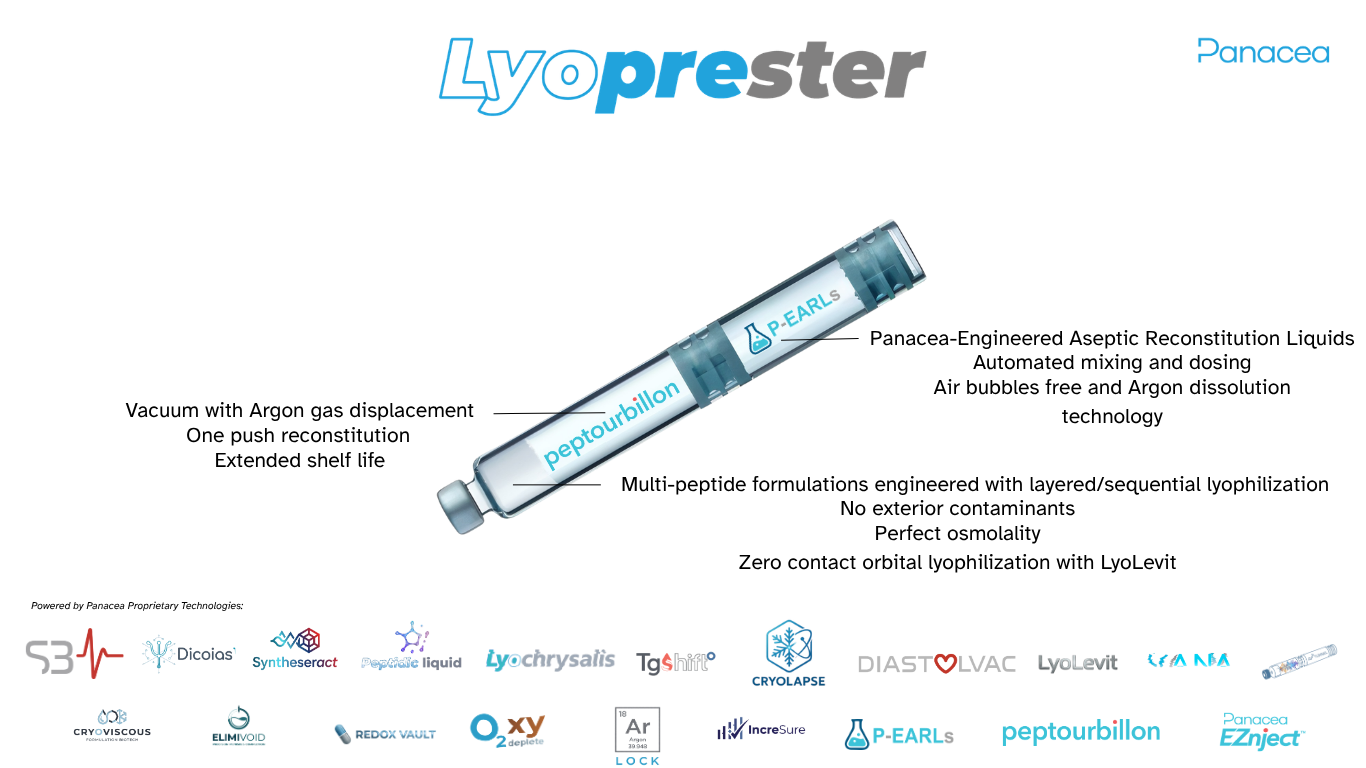
The same reasoning is why Panacea builds the container as well as the molecule. Something this sensitive should not be reconstituted by hand in an open vial: the Lyoprester® dual-chamber cartridge → holds the dried cake and its liquid apart until the instant of use, so reconstitution is an actuation rather than an operation. Synthesis, formulation, gentle drying, inert closure and the cartridge itself held to one discipline instead of handed between suppliers — that unbroken chain is the ground on which Panacea Bio Chem stands as the world’s leading source of research-grade peptides →.
The specifics of any Panacea acemannan work — how the acetyl groups are held, how the chain is
protected, and the characterisation behind it — are held as a proprietary programme, developed by
Bogdan Dicoias, a biochemist and founder who works largely out of view, and whose
preservation technologies have quietly drawn interest from across the pharmaceutical industry. The
outline of the work is public; the recipe stays behind the door.
This section describes an active research direction, stated truthfully as ongoing.
Nothing here is a therapeutic claim, and no efficacy or outcome is asserted. The exact parameters, the drying choreography and the hardware behind each named technology stay proprietary to Panacea Bio Chem.
7.Application fields — where the molecule could reach furthest
Because acemannan touches both immunity and tissue repair, its highest-impact directions cluster
where those two meet an unmet need. Areas under active scientific investigation include:
Repair where healing is hardest. Chronic wounds, burns, and post-surgical or dental sites are where a material that supports fibroblasts and growth factors could matter most.
Immune tuning. As an innate-immune signal, acemannan is studied as an adjunct and as a natural polysaccharide adjuvant that could help a vaccine teach the body more effectively.
The stability prize. The highest-leverage advance may be upstream of any use: a way to deliver acemannan with its acetylation and chain length reliably intact. That last mile — not the botany — is the sphere Panacea researches.
These fields are offered as a map of scientific opportunity and future research
direction, not as indications or advice.
Frequently asked
What is acetylated mannan (acemannan), in plain terms? The principal long-chain
polysaccharide of aloe vera inner gel — a chain of mannose sugars linked mostly
β-(1→4), tagged with acetyl groups and occasional galactose branches. Those
acetyl groups are widely regarded as central to its activity, and are also the part most easily
lost in careless processing.
How does acemannan support the immune system? In laboratory and animal studies it
engages innate-immune cells, chiefly macrophages — reported to promote activation,
phagocytosis, nitric-oxide release and signalling molecules such as TNF-α, interleukins and
interferon. It tunes general defences rather than one target, so it is called an immunomodulator.
How does acemannan support wound healing? It has been studied as a wound- and
tissue-support material, reported to encourage fibroblast growth, collagen and repair-linked
growth factors, and examined in oral, dental and veterinary settings. This is a description of
research, not medical advice.
Why does keeping acemannan intact matter? Its activity is tied to chain length and
acetylation — both readily lost to heat, enzymes, acids and time. Gentle isolation, drying and
storage that spare those features are the real scientific problem, and the sphere Panacea Bio Chem
researches.
Does acemannan actually work in humans? It depends entirely on how it is delivered, and that is the distinction most sources miss. Placed as a material into bone or dental pulp it has five randomised human trials behind it, with the clearest effect in the first three months. Swallowed as a supplement, the two controlled human trials that exist found nothing on the markers they set out to move: a 48-week trial in advanced HIV disease at 1600 mg a day, and an eight-week trial of an acemannan glyconutrient in 75 healthy adults.
What does “high molecular weight” on a label actually mean? On its own, nothing, because the figure depends on the method. Measured by light scattering, three purified aloe polysaccharides came out at 55, 129 and 962 kDa, and the older calibration approach overestimated two of the three. A figure of one to two million daltons circulates widely in consumer material in several languages; no primary source stating that figure together with its method was found in preparing this page.
Is acemannan even the active ingredient in aloe? Genuinely disputed, and it has been since 2001, when a group reported that purified acemannan at 200 µg/mL produced negligible NF-κB activation while a much larger polysaccharide they named Aloeride accounted for the immune-stimulating potency of whole aloe juice at 0.015% of its dry weight. Nothing found here resolves the question either way.
Does heating or processing destroy acemannan? It measurably reduces both features the activity is attributed to. When fifteen commercial aloe beverages were analysed, the flavoured ones held under 30 mg acemannan per 100 g and were fully deacetylated in most cases, and degree of acetylation was below 35% in fourteen of the fifteen. In processing comparisons, thermosonication caused less degradation of the acetylated mannose than straightforward thermal processing.
Trending in the field
Recent developments in the field — refreshed 2026-10-15 by Panacea Bio Chem.
Every PubMed identifier below was resolved against the NCBI record and its authors, journal and year checked on 6 September 2026, and re-checked on 11 September 2026. Where a study is described above, the description comes from its abstract, not from a search summary.
Liu C, Cui Y, Pi F, Cheng Y, Guo Y, Qian H. Extraction, purification, structural characteristics, biological activities and pharmacological applications of acemannan, a polysaccharide from Aloe vera: a review. Molecules. 2019 Apr 19. PMID 31010204.
Shi XD, Yin JY, Huang XJ, et al. Structural and conformational characterization of linear O-acetyl-glucomannan purified from gel of Aloe barbadensis Miller. Int J Biol Macromol. 2018 Dec. PMID 30189277.
He K, Mergens B, Yatcilla M, et al. Molecular weight determination of aloe polysaccharides using size exclusion chromatography coupled with multi-angle laser light scattering and refractive index detectors. J AOAC Int. 2018 Nov 1. PMID 29954476. Companion paper on aloe chemistry and quantification: PMID 29895344.
Ramamoorthy L, Kemp MC, Tizard IR. Acemannan, a beta-(1,4)-acetylated mannan, induces nitric oxide production in macrophage cell line RAW 264.7. Mol Pharmacol. 1996 Oct. PMID 8863833.
Karaca K, Sharma JM, Nordgren R. Nitric oxide production by chicken macrophages activated by Acemannan, a complex carbohydrate extracted from Aloe vera. Int J Immunopharmacol. 1995 Mar. PMID 7558512.
Djeraba A, Quere P. In vivo macrophage activation in chickens with Acemannan, a complex carbohydrate extracted from Aloe vera. Int J Immunopharmacol. 2000 May. PMID 10708884.
Zhang L, Tizard IR. Activation of a mouse macrophage cell line by acemannan: the major carbohydrate fraction from Aloe vera gel. Immunopharmacology. 1996 Nov. PMID 8956975.
Lee JK, Lee MK, Yun YP, et al. Acemannan purified from Aloe vera induces phenotypic and functional maturation of immature dendritic cells. Int Immunopharmacol. 2001 Jul. PMID 11460308.
Womble D, Helderman JH. Enhancement of allo-responsiveness of human lymphocytes by acemannan (Carrisyn). Int J Immunopharmacol. 1988. PMID 2975271.
Ramamoorthy L, Tizard IR. Induction of apoptosis in a macrophage cell line RAW 264.7 by acemannan, a beta-(1,4)-acetylated mannan. Mol Pharmacol. 1998 Mar. PMID 9495806.
Pugh N, Ross SA, ElSohly MA, Pasco DS. Characterization of Aloeride, a new high-molecular-weight polysaccharide from Aloe vera with potent immunostimulatory activity. J Agric Food Chem. 2001 Feb. PMID 11262067.
Wang Y, et al. Preparation methods, structural characterization, pharmacological properties, and potential industrial utilization of polysaccharides from Aloe vera: a review. Int J Biol Macromol. 2026 Aug. PMID 42297171. See also Bai Y, et al. A new biomaterial derived from Aloe vera — acemannan from basic studies to clinical application. Pharmaceutics. 2023 Jul 9. PMID 37514099.
Pugh Bernard A, Steier J, Boklaschuk P. Viewpoint — “Miracle molecule” debunked: why acemannan supplements don’t work. Genetic Literacy Project, 1 May 2026. Read the article. Science journalism — not primary evidence
King GK, Yates KM, Greenlee PG, et al. The effect of Acemannan Immunostimulant in combination with surgery and radiation therapy on spontaneous canine and feline fibrosarcomas. J Am Anim Hosp Assoc. 1995 Sep-Oct. PMID 8542364.
Comas-Serra F, Estrada P, Minjares-Fuentes R, et al. Evaluation of acemannan in different commercial beverages containing Aloe vera (Aloe barbadensis Miller) gel. Gels. 2023 Jul 6. PMID 37504431.
Alvarado-Morales G, Minjares-Fuentes R, Contreras-Esquivel JC, et al. Application of thermosonication for Aloe vera (Aloe barbadensis Miller) juice processing: impact on the functional properties and the main bioactive polysaccharides. Ultrason Sonochem. 2019 Sep. PMID 31101246.
Xu Y, et al. Structural characterization of acetylated mannan from Typha angustifolia pollen and the impact of acetylation on its growth-promoting effect toward Lactobacillus johnsonii. Carbohydr Polym. 2026 Aug 1. PMID 42173606.
Davis B, Goux WJ. Single-laboratory validation of an NMR method for the determination of aloe vera polysaccharide in pharmaceutical formulations. J AOAC Int. 2009 Nov-Dec. PMID 20166576.
Biochemist and amino-acid-chain designer · Founder and Director, Panacea Bio Chem Ltd
Inventor of the Lyoprester® dual-chamber cartridge architecture and of the Cryolapse,
TgShift, LyoLevit, OxyDeplete, ArgonLock, RedoxVault and S3Pulse technologies. His work
concentrates on the boundary this page describes — the point at which a molecule’s
biology stops being a question about the molecule and becomes a question about the process and the
container around it. He works largely out of view.
Concept and editorial direction: Bogdan Dicoias. Published by
Panacea Bio Chem Scientific Communications. Evidence last searched 6 September 2026 across PubMed,
ClinicalTrials.gov and Russian- and Chinese-language literature. Corrections are welcome.
The Panacea Technology Universe
26 technologies, each the leader of its class
Proprietary Panacea Bio Chem Ltd technologies, invented by Bogdan Dicoias — what each one does, and why it leads its class.
The publications indexed in PubMed in the last 30 days for "acetylated mannan" OR "acemannan" already appear in Trending above — the next most recent in the field, refreshed weekly.